The Prompt Safari Field Guide: From Prompt Monkey to Factory Operator
Table of contents
The Prompt Monkey Problem
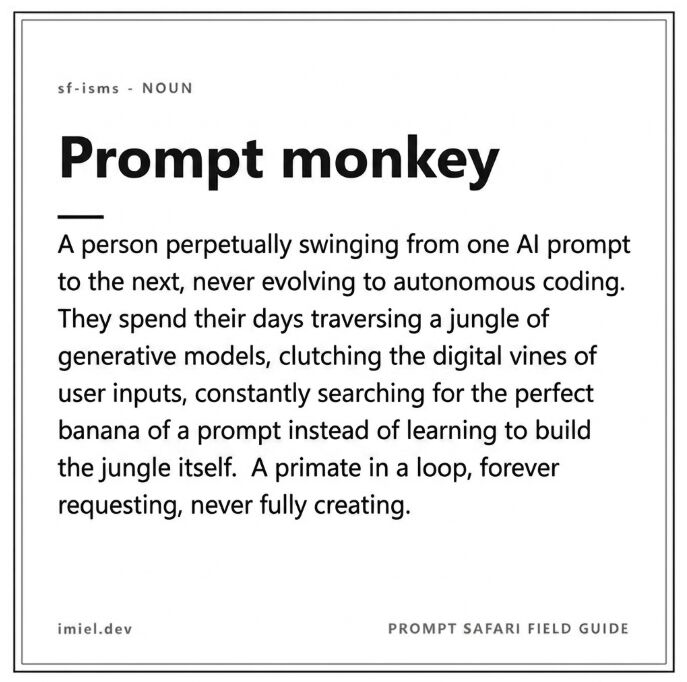
You know the type. Maybe you are the type. Swinging from one AI prompt to the next, clutching the digital vines of user inputs, searching for the perfect banana of a prompt instead of learning to build the jungle itself.
I was the type. I spent months crafting prompts like artisanal bread. Every word deliberate. Every system instruction hand-tuned. And then the model would update and half my prompts would break, and I would start over, swinging to the next vine.
Then Boris Cherny, the person who built Claude Code, said something that reframed the entire game: "I don't prompt Claude anymore. I have loops running that prompt Claude and figure out what to do. My job is to write loops."
He hasn't handwritten a line of code in 2026. He merges 50 to 150 PRs a day from his phone. He runs a few thousand agents overnight. Not because he is superhuman. Because he stopped being a prompt monkey and started being a loop engineer.
This is a field guide to making that transition.
The Prompt Safari: A Field Guide to the Species
Before I explain loops, let me describe the species I have observed in the wild. You will recognize most of them. You might be one of them right now.
The Prompt Monkey
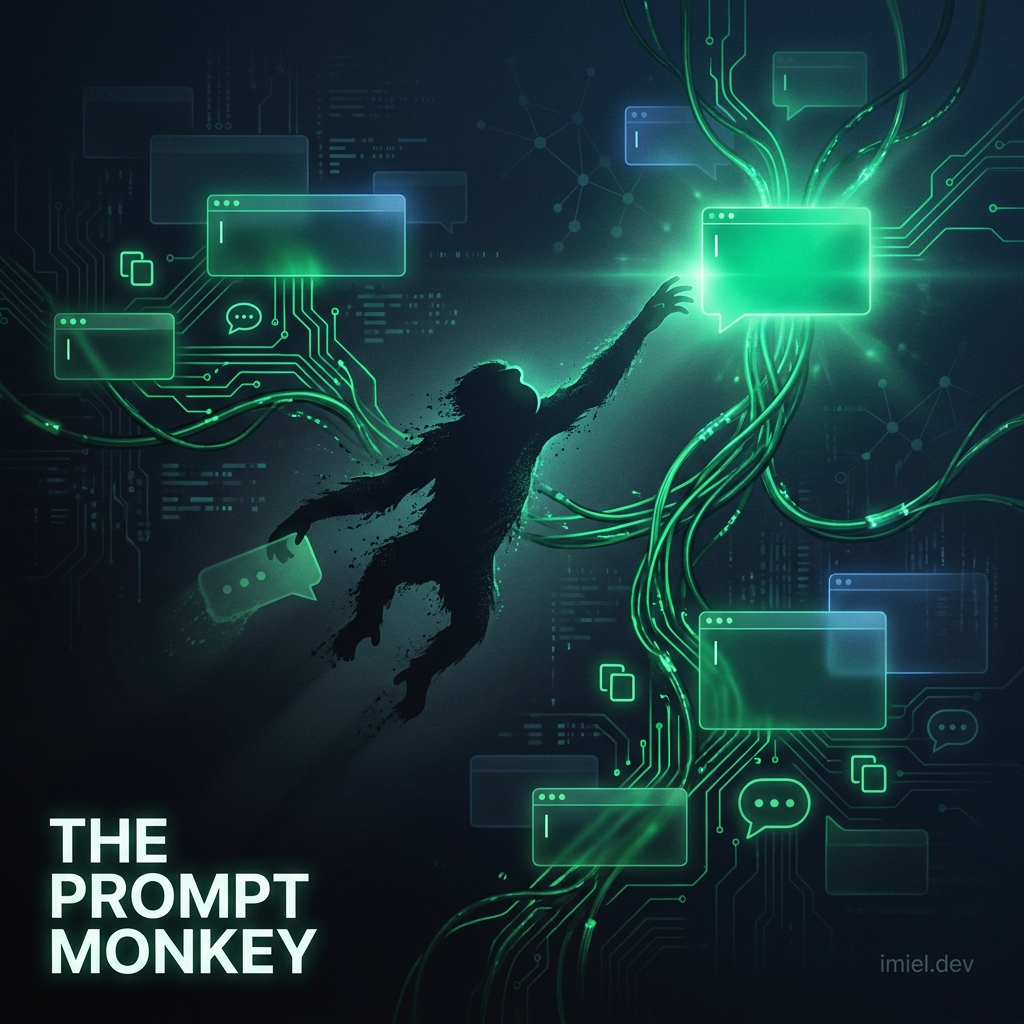
Habitat: ChatGPT, Claude.ai, the chat window of any IDE copilot.
Behavior: Types a prompt. Reads the output. Types another prompt. Reads the output. Copy-pastes code into their editor. Runs it. Gets an error. Goes back to chat. Pastes the error. Types "fix this." Repeats until it works or they give up.
The Prompt Monkey is the most common species in the wild. They treat AI as a conversation partner. Every interaction is manual. Every iteration requires their attention. They are the bottleneck in their own workflow, and they do not realize it because the conversation feels productive.
The tell: they measure productivity in prompts per hour.
The Prompt Artisan
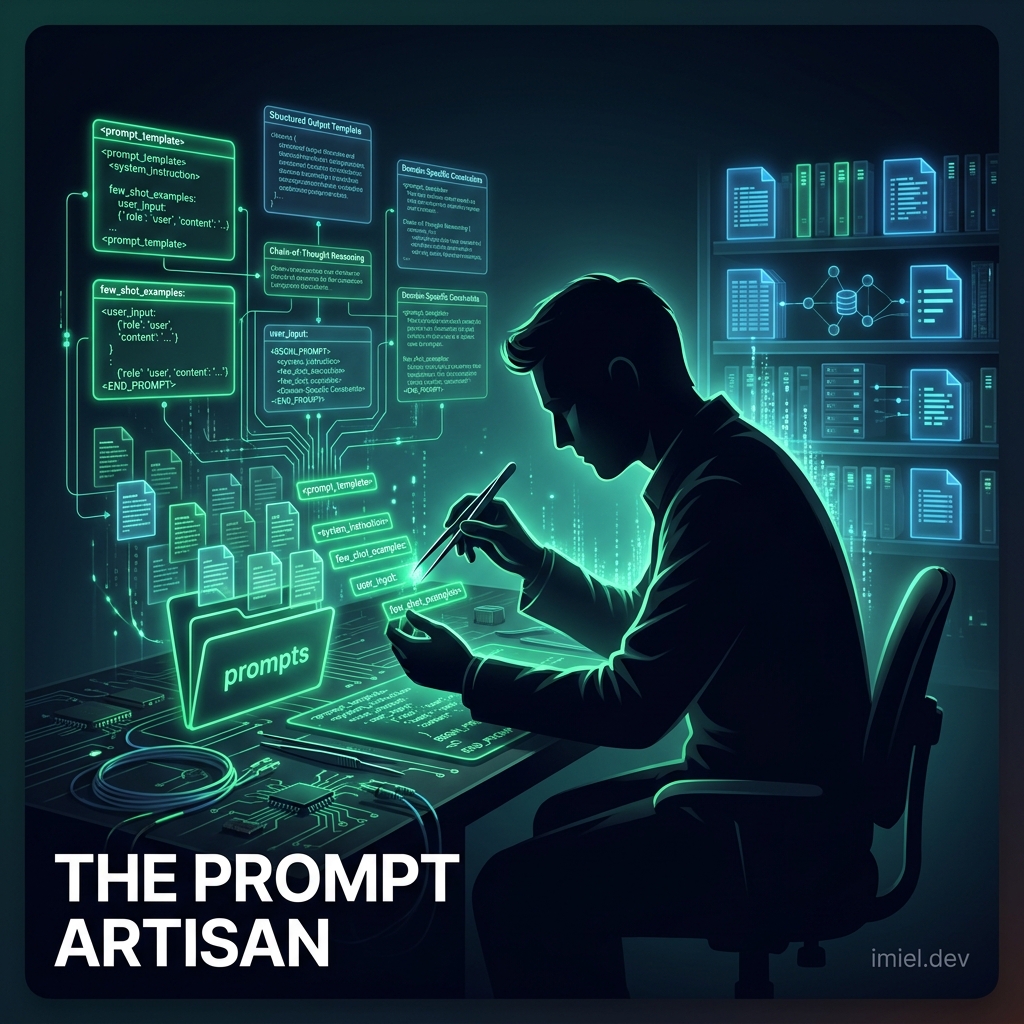
Habitat: System prompt editors, .cursorrules files, meticulously maintained CLAUDE.md files.
Behavior: Spends hours crafting the perfect system prompt. Uses XML tags. Structures few-shot examples. Writes persona descriptions. Maintains a library of prompt templates for different tasks.
The Prompt Artisan is more sophisticated than the Monkey. They understand that context shapes output. But they are still in the loop manually. Every task starts with them selecting the right prompt, feeding it the right context, and evaluating the output themselves.
The tell: they have a folder called "prompts" with 47 markdown files in it.
The Tool Caller
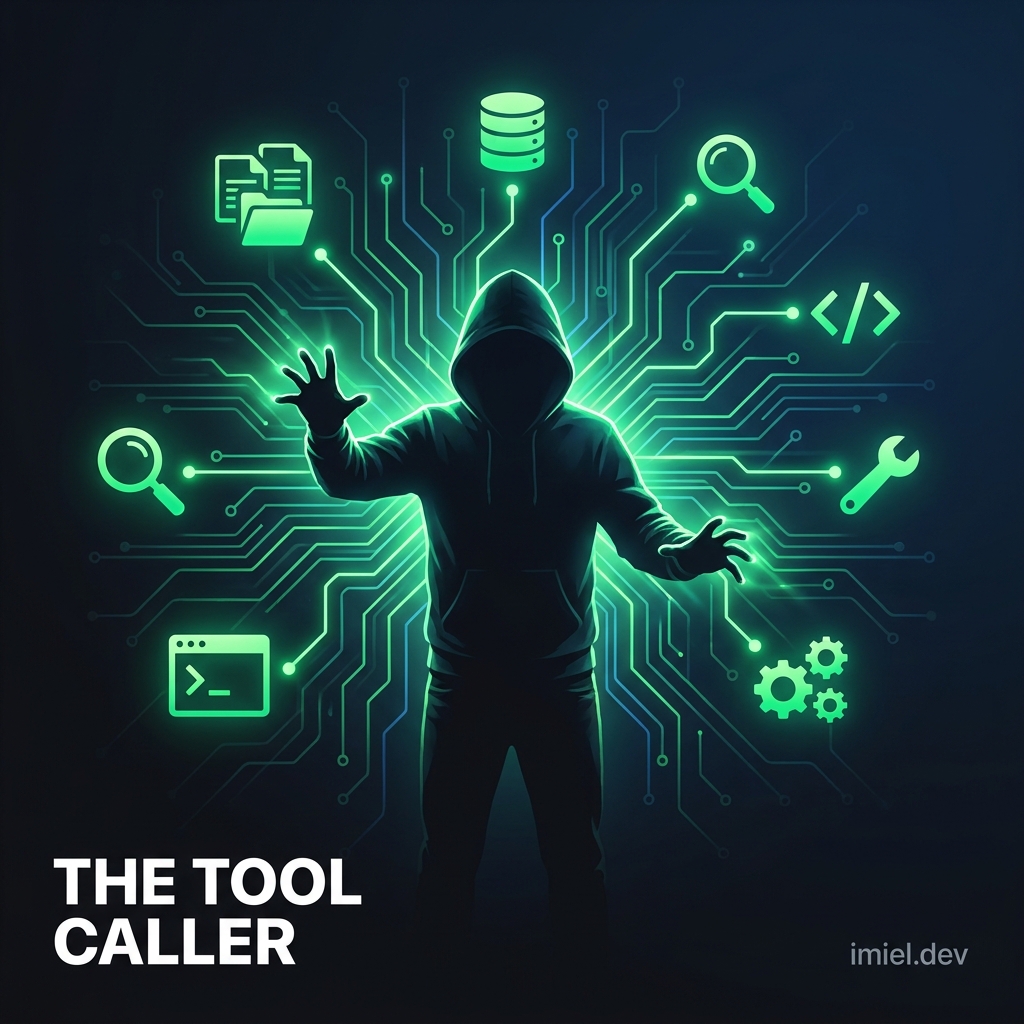
Habitat: MCP servers, function-calling APIs, agent frameworks.
Behavior: Has wired up tools. The AI can read files, search the web, query databases, run code. But the human still initiates every task, watches the output, and decides what happens next.
The Tool Caller has crossed an important line: the AI can now act on the world, not just generate text. But the human is still the scheduler, the dispatcher, the quality gate, and the retry logic. They are running a factory where they personally operate every machine.
The tell: they have 12 MCP servers connected and still type every command.
The Loop Engineer
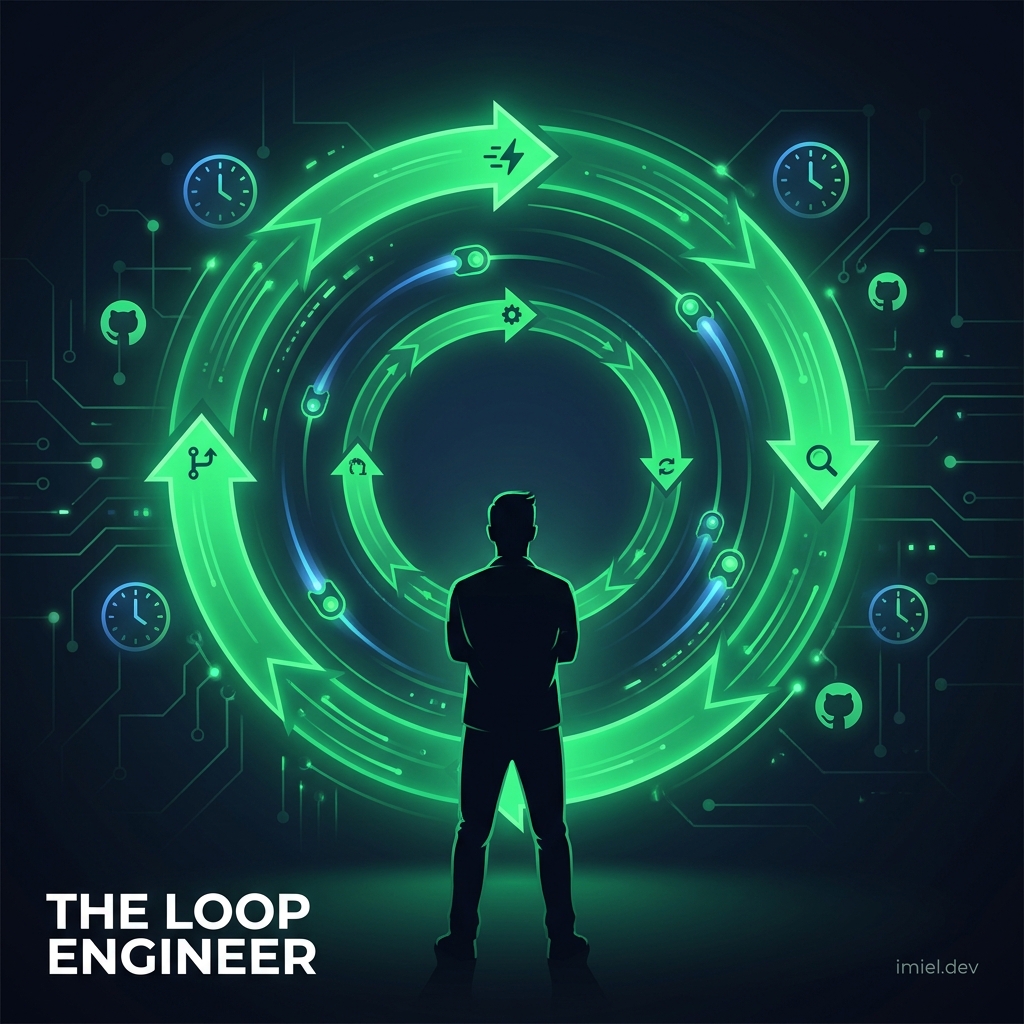
Habitat: Cron jobs, GitHub Actions, Claude Code /loop commands, overnight agent runs.
Behavior: Designs systems that prompt the AI, evaluate the output, decide whether to retry, and move to the next task, all without human intervention. They write the machine that does the work. They check the output in the morning.
The Loop Engineer does not write better prompts. They write better systems. The prompt is a component inside a larger machine, not the thing they craft by hand every time.
The tell: they measure productivity in merged PRs per day, and the number keeps going up while their screen time goes down.
The Factory Operator
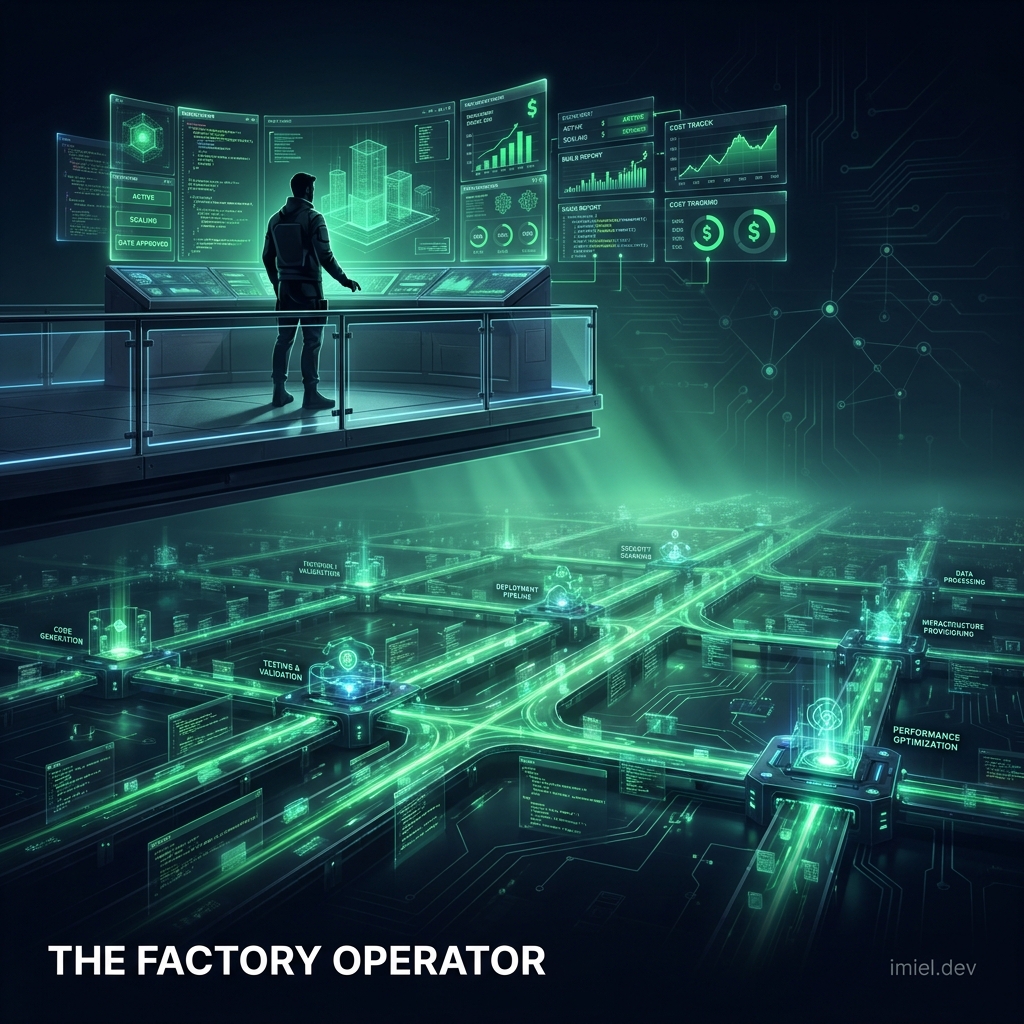
Habitat: Multi-agent orchestration systems, software factories.
Behavior: Defines intent. Sets constraints. Approves gates. The system decomposes work, dispatches agents, handles failures, escalates blockers, merges results, and reports back.
The Factory Operator is the Loop Engineer at scale. They are not writing individual loops. They are designing the factory floor: which agents do which jobs, how work flows between them, what happens when something fails, and where humans need to approve.
The tell: they have a build report with a cost tab showing token usage per phase, and they did not write any of the code in it.
The Anatomy of a Loop
Boris Cherny's framework breaks a working loop into six building blocks. Understanding these is the difference between "I use AI" and "AI works for me."
1. Automations (The Trigger)
A loop needs something to start it. Not you typing a message. An event: a PR opens, a file changes, a cron fires, a CI run fails, a new issue appears on the board.
The simplest trigger is a schedule. Claude Code's /loop command runs a repeating job on a cron. Cherny runs "dozens of loops" continuously to babysit pull requests, fix CI, and auto-rebase.
But triggers can be anything: a webhook from GitHub, a Slack message matching a pattern, a file watcher on a directory. The point is that the human does not need to remember to start the work.
2. Worktrees (The Isolation)
When you run multiple agents in parallel, they will collide. Two agents editing the same file on the same branch produces merge conflicts that are painful to debug and easy to miss.
The solution is isolation. Git worktrees give each agent its own checkout of the repo with its own branch. They can work simultaneously without touching each other's files. When a task passes, the orchestrator merges its branch, removes the worktree, and prunes.
This is the same pattern I use in /buildthis. Every concurrent task gets its own worktree. At the end of every phase, the system verifies zero orphaned worktrees remain.
3. Skills (The Context)
A loop without context produces generic output. Skills are project knowledge written once and loaded at the start of every agent session. They encode what the project is, how it works, what the conventions are, and what "good" looks like.
This is where the Prompt Artisan's work survives, but in a different form. Instead of a prompt you manually select and feed to the model, a skill is loaded automatically by the system. The human writes it once. Every agent inherits it forever.
My /buildthis skill is 2000+ lines of operational knowledge compressed into a single file. It knows how to decompose plans, run state machines, handle escalations, enforce design standards, and generate reports. No human prompts it at runtime. The system prompts itself.
4. Connectors (The Reach)
An agent that can only read and write files is limited. Connectors plug the agent into the systems where work actually lives: GitHub for PRs and issues, Linear for tickets, databases for state, Slack for notifications, CI for test results.
The connectors are what make the loop close. Without them, the agent does work but a human has to move the results to where they matter. With them, the agent opens the PR, links the ticket, watches CI, and reports back.
5. Subagents (The Division of Labor)
The single most reliable pattern in multi-agent systems: separate the writer from the checker. The agent that writes the code should not be the agent that reviews it. The agent that diagnoses a bug should not be the same one that got stuck on it.
In /buildthis, this is the three-tier model: builder, advisor, orchestrator. The builder writes code. When it gets stuck, the orchestrator sends the problem to an advisor with a structured problem statement. The advisor diagnoses and returns a fix plan. A fresh builder implements it.
Cherny does the same thing. His loops use separate writer and checker agents. The checker is a different Claude instance with a different system prompt optimized for review.
6. Memory (The Learning)
Models forget. Every new context window starts empty. But repos do not forget. Memory, in the loop engineering sense, is persistent state that tracks what was tried, what passed, what failed, and what the project learned across sessions.
This is why /buildthis writes Build/tasks.json after every state transition. If the session drops, the next session picks up from the last known state. The state machine survives context window limits, crashes, and interruptions.
The Maturity Curve
The species map to a maturity curve, and each level unlocks a step change in throughput:
Level 0: Manual. You write code by hand. AI is not in the picture.
Level 1: Prompt Monkey. You talk to AI, copy-paste results. Throughput is capped by your typing speed and attention span.
Level 2: Prompt Artisan. You get better outputs through better prompts. Throughput is still capped by you, but the quality per interaction goes up.
Level 3: Tool Caller. AI can act on the world. Throughput per session goes up because the AI does multi-step work. But you still start and supervise every session.
Level 4: Loop Engineer. Systems run without you. Throughput decouples from your attention. Work happens while you sleep. Cherny's overnight agents live here.
Level 5: Factory Operator. Multiple loops compose into a delivery system. Work flows from intent to shipped code through automated decomposition, execution, QA, and deployment. This is the software factory model.
Most developers in August 2026 are at Level 1 or 2. The gap between Level 2 and Level 4 is not about prompting skill. It is about systems thinking.
Why Building the Machine Matters More Than Feeding It
Here is the thing that took me too long to internalize.
Prompt engineering is a skill with a ceiling. You can get 2x better at prompting and maybe 2x your output. But you are still the bottleneck. You are still the scheduler, the dispatcher, the quality gate, the retry logic.
Loop engineering has no ceiling because you are building systems that compound. A loop that fixes CI failures saves you 15 minutes today and 15 minutes every day forever. A loop that triages issues and routes them to the right agent saves you an hour today and an hour every sprint forever. A factory that decomposes plans into parallel workstreams and executes them overnight does in 8 sleeping hours what used to take 8 working days.
The Prompt Monkey optimizes the prompt. The Loop Engineer optimizes the system. The Factory Operator optimizes the pipeline.
The returns at each level are not linear. They are multiplicative.
Getting Started: Three Loops to Build This Week
If you are at Level 1 or 2, here are three loops that will move you to Level 4 faster than any prompt library.
Loop 1: The CI Fixer
Trigger: CI fails on a PR. Action: Agent reads the failure log, identifies the fix, pushes a commit. Verification: CI re-runs. If it passes, done. If it fails again, retry once, then flag for human review.
This is the easiest loop to build and the one with the highest immediate payoff. Cherny runs this continuously.
Loop 2: The PR Reviewer
Trigger: PR opened or updated. Action: Reviewer agent reads the diff, checks against project conventions (loaded from skills/CLAUDE.md), posts review comments. Verification: Author agent addresses comments, pushes updates. Reviewer re-reviews.
Separating the writer and reviewer into different agents with different system prompts produces dramatically better code review than a single agent doing both.
Loop 3: The Overnight Builder
Trigger: Scheduled cron (e.g., midnight). Action: Agent reads the issue tracker, picks the top-priority unassigned issue, creates a worktree, implements the fix, runs tests, opens a PR. Verification: Tests pass. PR is ready for human review in the morning.
This is the loop that makes people say "wait, it did all that while I was asleep?" It is also the loop that requires the most trust in your test suite. Start with well-tested codebases.
The Uncomfortable Truth
The gap between Prompt Monkeys and Factory Operators is widening every month. In January 2026, the difference was maybe 3x productivity. By August 2026, it is closer to 50x. Cherny is not 50x smarter than the average developer. He built better systems.
The Prompt Monkey will keep swinging from vine to vine, searching for the perfect prompt. The Loop Engineer will keep building machines that make the search irrelevant.
The question is not whether you can write a good prompt. The question is whether you can build the system that writes the prompts for you.
Stop feeding the machine. Start building it.